Top Reasons Locals Love Every Great Irish Pub NYC Can Claim
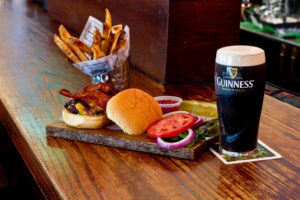
Ask a longtime New Yorker where they actually go after work, before a show, on a cold Sunday, or when a visiting friend wants a real neighborhood night out, and the answer often circles back to the same place: the Irish pub. Not the themed bar with shamrocks glued to the wall, and not the loud room built only for March crowds. The places locals return to have a different pull. They feel settled. They know what they are. They rarely need to advertise that fact.
A great Irish Pub NYC residents swear by tends to deliver something harder to manufacture than décor or drink specials. It offers relief. Relief from noise without becoming dull, relief from pretense without losing standards, relief from the kind of hospitality that feels scripted rather than genuine. In a city that changes block by block and month by month, those qualities matter more than people sometimes admit.
What locals love is not just one thing. It is the blend of steadiness, warmth, sharp service, and social ease that the best Irish pubs manage better than almost any other kind of establishment in the city. Some serve immaculate pints in narrow old rooms. Some are sprawling corner anchors with a lunch crowd, a postgame crowd, and families in earlier hours. Some lean more polished, others more worn in. The through line is trust. People walk in already expecting a certain level of comfort, and the best places reward that trust every time.
They know how to make people feel like regulars, even on the first visit
There is an art to being welcomed without being smothered. Great Irish pubs in New York understand it instinctively. A nod from the bartender, a quick move to clear a stool, a server who catches the eye at the right moment, these sound like small things until you spend enough nights in places that get them wrong.
Locals notice the difference immediately. In many bars across the city, guests are processed. Orders are taken, drinks are dropped, checks arrive. At a strong Irish pub, service is more observant than performative. Staff often remember names, drinks, routines, and timing. If you always want a pint and a water together, they catch on. If you are waiting for one more friend before ordering food, they do not hover. That level of attentiveness builds loyalty faster than any marketing campaign.
This is one of the clearest reasons the category endures. New York can be anonymous. Even people who love that freedom eventually want a place where they are recognized, or at least treated like they belong. The best Irish pubs provide that without turning the room into a private club. A solo customer reading at the bar, a group of coworkers loosening ties after six, a couple ducking in from the rain, all can coexist comfortably. That is harder to pull off than it looks.
The room feels lived in, not stage-designed
A common mistake in hospitality is confusing atmosphere with decoration. Locals can tell when a bar has tried to reverse engineer authenticity. Too many “heritage” cues and the place starts to feel like a set. Too much polish and it loses the grounded quality people came for in the first place.
The Irish pubs that hold onto neighborhood affection usually have texture you cannot fake well. The wood is worn where hundreds of hands have rested. The brass has been cleaned but not made sterile. Mirrors, framed photos, old signs, and shelves of bottles sit in a way that suggests years of accumulation rather than a single designer’s shopping trip. Even in newer spaces, the good ones understand restraint. They leave room for the bar itself to carry the identity.
Lighting matters more than many owners realize. A pub should let you see your companion’s face without feeling overexposed. The strongest rooms in this category tend to favor warm light, sensible spacing, and acoustics that allow conversation to survive. That last point is not trivial. A packed Manhattan bar can quickly become punishing. In a proper Irish pub, noise gathers, but it does not always ricochet. You hear laughter, clinking glassware, a game on television in one part of the room, maybe music that supports the mood rather than steamrolling it.
For locals, that comfort level becomes part of the attraction. It is the difference between staying for one round and deciding, almost by accident, that the whole evening can happen there.
The pint still matters
It would be hard to overstate how much credibility rests on the quality of a simple pour. If a pub presents itself through Irish tradition, the basics have to be right. Beer should be fresh. Glassware should be clean. Temperature should be correct for the style, not icy just for the sake of it. Staff should know when a pint needs a proper settle and when speed matters more.
New Yorkers are not shy about judging bars by fundamentals. A room can be beautiful, and the playlist can be perfect, but if the first pint lands flat or tired, the romance drains out quickly. The great places understand that consistency creates confidence. You can pop in at 2 p.m. On a Tuesday or 9 p.m. On a Friday and expect nearly the same standard. That is one of the quiet achievements behind every beloved Irish Pub NYC drinkers recommend to friends.
The same goes for whiskey, even if beer gets most of the attention. A thoughtful back bar signals seriousness, but locals are often more impressed by knowledge than by sheer inventory. They appreciate bartenders who can steer someone toward an approachable Irish whiskey rather than launching into a lecture. They value a neat pour served cleanly, with no fuss, and no pressure to spend beyond their mood.
Food is not an afterthought
One reason Irish pubs perform so well as neighborhood institutions is that they understand the middle of the day, not just the peak of the night. They are lunch spots, early dinner spots, places for a late bite that still tastes like food rather than damage control.
Locals often return because the kitchen is dependable. The menu does not have to be sprawling, and in fact many of the best are edited with discipline. What matters is that a burger arrives cooked as ordered, fish and chips stay crisp, soup tastes made rather than poured, and the shepherd’s pie, stew, or sausage plate feels like someone cared before it reached the table. There is comfort in seeing a room that can feed both a quick solo diner and a six-person table without the wheels coming off.
A great pub kitchen also respects pacing. Some nights people are there to eat first and drink second. Other nights they only need something sturdy between rounds. The best operations read the difference. They do not send appetizers and mains crashing into each other. They do not make guests chase the staff for mustard, napkins, or the check. These are ordinary details, but neighborhood loyalty is built on ordinary details repeated well.
Around the city, I have seen the same pattern countless times. A pub that gets known for one satisfying plate, a generous sandwich, a bowl of stew in winter, a proper brunch before a match, starts attracting the kind of repeat business trendier spots envy. Not because it is flashy, but because it becomes useful in a deeply pleasant way.
They work at almost any hour of the week
Few venues in New York are as versatile as a strong Irish pub. That range is a huge part of the affection locals feel for them. A wine bar may be excellent for dates. A cocktail bar may be perfect when someone wants a polished night out. A sports bar may carry the game-day crowd. The neighborhood Irish pub often does all three jobs adequately, and one or two of them exceptionally.
At noon, it might host workers escaping the office for a quick lunch. By late afternoon, it becomes a landing zone for the first wave of after-work regulars. In early evening, friends meet there because no one needs to explain the place. Later, it can become louder and more animated without fully losing its shape. On weekends, it may absorb families, tourists, soccer fans, birthday groups, and older regulars who have occupied the same corner for years.
That flexibility is rare. It depends on staff discipline, room design, menu breadth, and a kind of social intelligence from management. If the place leans too hard into one identity, the balance breaks. The pub becomes either too rowdy for everyday use or too stiff to feel alive. The local favorites usually avoid that trap. They know who they are, but they leave enough space for the crowd to evolve over the day.
Conversation still comes first
One overlooked reason people love Irish pubs is that they remain among the best places in the city to actually talk. This sounds simple until you compare them with many fashionable bars where sound systems overwhelm the room or seating arrangements make eye contact awkward.
In a good pub, conversation is part of the architecture. Stools line the bar with enough shoulder room to linger. Booths or banquettes allow a group to settle in. Tables are close enough to create energy but not so cramped that every sentence becomes public. The room invites storytelling, catching up, commiseration, and harmless debate.
That quality has practical consequences. It makes the pub a place for real friendship rather than mere activity. Locals use these spaces to mark ordinary life. A promotion, a breakup, a funeral wake, a reunion after a move, a quiet drink after bad news, a first meeting with future in-laws, all of these happen in pubs because the format is forgiving. You can keep things light or let them deepen. The room can hold both.
There is a reason so many New Yorkers have one pub story that begins with “I only meant to stay for one.” These places encourage extension. Another round becomes another hour because the environment supports human connection rather than interrupting it.
Sports bring energy, but they do not have to take over
The relationship between Irish pubs and sport is one of the more attractive balances in city nightlife. Locals often want the option of watching a match, a playoff game, or a Sunday slate without entering a giant branded sports bar where every surface screams for attention.
The best Irish pubs know how to host sports without reducing the room to a single mood. Screens are visible, but not absurd. Sound is handled sensibly. Fans can care loudly, but the place still functions for people who came to talk or eat. During major matches, especially soccer, rugby, or high-stakes local games, the energy can be electric. Yet on a normal evening, that same room does not feel captive to the television schedule.
This balance matters in mixed groups. One person may be deeply invested in the result, another barely aware of the teams involved. A skilled pub allows both people to enjoy themselves. That social flexibility is one of the strongest arguments for the category’s enduring popularity in neighborhoods across Manhattan, Brooklyn, Queens, and the Bronx.
They offer value where value is getting harder to find
No honest observer would claim New York drinking and dining is cheap. Prices have climbed, portions have fluctuated, and many people think harder before ordering a second round. Even so, locals often perceive a better value equation in good Irish pubs than in trend-led alternatives.
Part of that comes from transparency. The pub rarely feels like a place where every detail is engineered to upsell. You know roughly what you are getting. Portions tend to be fair. Pours are usually respectable. There is less pressure to order theatrically, and less risk that a simple request turns into a premium surprise.
Value also comes in the form of time. If guests feel comfortable lingering over one more drink, or splitting a few plates without being rushed, the night becomes more satisfying relative to cost. That emotional math matters. Many New Yorkers will gladly pay city prices when the experience feels grounded and generous rather than strained.
Locals remember spots that protect this balance. It might be a weekday special, a notably honest burger-and-pint combination, or simply a check that never feels insulting for what landed on the table. In a city where some bars seem to confuse ambition with excess, restraint can be a competitive advantage.
The crowd usually reflects the neighborhood better than trendier venues do
One of the best signs of a healthy pub is the mix of people inside. Not perfect demographic symmetry, which no venue really achieves, but a visible range of ages, occupations, and reasons for being there. The room should feel like it belongs to the area around it, even when visitors drop in.
Locals love this because it softens the usual social sorting of New York nightlife. The pub is one of the last urban spaces where a construction worker, a teacher, an attorney, a nurse coming off shift, a retired couple, and a few people from the nearby hotel might all occupy the same room without friction. They may not interact much beyond ordering and occasionally commenting on the game, but the coexistence matters. It makes the place feel civic in a small, useful sense.
This kind of crowd balance does not happen by accident. Management sets the tone. Staff enforce standards without making the place severe. Music choices, pricing, television volume, and even the style of greeting all influence who feels comfortable staying. The best Irish pubs understand this intuitively. They do not chase every customer. https://maps.app.goo.gl/c2ekeyx9WzJPnX1V6 They cultivate the ones who fit, and over time that creates a room locals trust.
Weather hits differently when there is a proper pub nearby
There is a seasonal dimension to pub affection that people who do not live in New York may underestimate. On raw winter evenings, few things are more appealing than stepping into a warm room with a dark wood bar, a hot meal, and a well-poured pint. During heavy rain, a pub can turn from convenient to nearly essential. Even in summer, when some bars become sticky and exhausting, the best pubs still offer shade, cool air, and a slower tempo than rooftop culture.
This weather relationship gives Irish pubs a year-round utility that many nightlife concepts lack. They are not just fair-weather destinations. They are shelter with standards. That makes them part of the emotional infrastructure of city living. New Yorkers build routines around places that improve the day at precisely the moment the city feels least hospitable.
I have heard versions of the same sentiment from residents in different boroughs for years: you may try new restaurants and bars constantly, but when the weather turns, you go back to the pub that has never let you down. That reliability forms habits, and habits become local love.
The best ones age well
Some bars peak early and decline fast. They open with heat, crowd every night for a season, and then slowly become less interesting once novelty fades. Great Irish pubs usually follow the opposite trajectory. If they are well run, they improve with time.
The room gains history. Staff settle into rhythm. Regulars create a culture newcomers can feel. Menus are refined. Weak points are exposed and fixed. Tiny traditions emerge, a holiday gathering, a certain bartender’s Sunday shift, a dish everyone orders in winter, a charity event, a televised match that reliably packs the place twice a year.
This ability to age well is one reason locals defend these pubs so fiercely. They are not only businesses. They become markers of continuity in a city that often seems determined to erase its own memory. When a beloved pub closes, the loss lands differently than the closing of a more interchangeable bar. People feel as though part of the neighborhood’s conversational life has gone with it.
What separates the merely decent from the beloved
Not every pub with a Guinness sign earns local devotion. The gap between decent and beloved is usually narrow on paper, but obvious in practice. The beer may be similar, the menu may overlap, and the room may look passably right. The difference is execution over time.
Here is where the strongest places tend to stand apart:
- They deliver consistency across quiet nights and busy ones.
- They hire staff who can be warm without becoming intrusive.
- They keep standards high without sanding away personality.
- They welcome regulars while leaving room for newcomers.
- They understand that comfort is a craft, not an accident.
That last point deserves emphasis. Comfort in hospitality is not softness or lack of ambition. It is precision aimed at ease. Chairs at the right height, music at the right level, food arriving when it should, bartenders reading the room, management noticing the details guests never mention directly. Beloved pubs make this seem natural, which is why many people underestimate how much skill is involved.
Why locals keep coming back
A city as restless as New York creates a special appetite for places that feel dependable without being stale. That is the core of the Irish pub’s local appeal. It can absorb celebration and routine, solitude and noise, hunger and idleness, all without demanding much from the guest beyond showing up and settling in.
The best examples are not frozen in nostalgia. They work because they remain relevant to present-day city life. Office patterns have changed, neighborhoods have shifted, and younger customers drink differently than earlier generations did. Yet the strongest pubs continue to matter because they serve a deeper need than trend. They provide somewhere to gather that feels both public and personal.
That is why locals love every truly great Irish Pub NYC can claim. Not just for the pint, though the pint matters. Not just for the food, though good pub food can rescue an evening. They love these places because they offer one of the rarest pleasures in New York: immediate belonging, earned over time, and available on almost any night of the week.
Hibernia Bar
401 W 50th St
New York, NY 10019, United States
Phone: +1 212-969-9703
FAQ About Irish Pub NYC
What is the best Irish pub in NYC?
The best choice depends on your location and preferred atmosphere. Hibernia Bar is a neighborhood Irish pub in Hell's Kitchen offering Guinness, Irish whiskey, pub food, and sports viewing.
Where do Irish people go in NYC?
New York's Irish community gathers in many neighborhoods and venues. Hibernia Bar welcomes Irish expats, local residents, and visitors at 401 W 50th St, just off Ninth Avenue.
Where can I watch GAA games in New York?
Hibernia Bar lists GAA among the sports it shows. Call +1 212-969-9703 to confirm coverage and opening times for a particular match before visiting.
What is the difference between a bar and a sports bar?
A sports bar emphasizes televised games and a shared viewing atmosphere. Hibernia combines sports viewing with the food, drinks, and hospitality of a neighborhood Irish pub.